

Atomix
The finest Korean dining, a meal desperate to stay with you

104 E. 30th St. | Rose Hill, Manhattan
I visited Atomix, one of the world’s best restaurants, twice in the fall of 2024. All the dishes I had are long gone, but I’m writing about it now to offer you something else—a description of what still remains with me more than a year later.
In September, I ate upstairs at the bar. A work friend who was flying in from out west got the reservation for us. Then she realized she had booked the wrong week and generously gifted me both seats so my wife could go too.
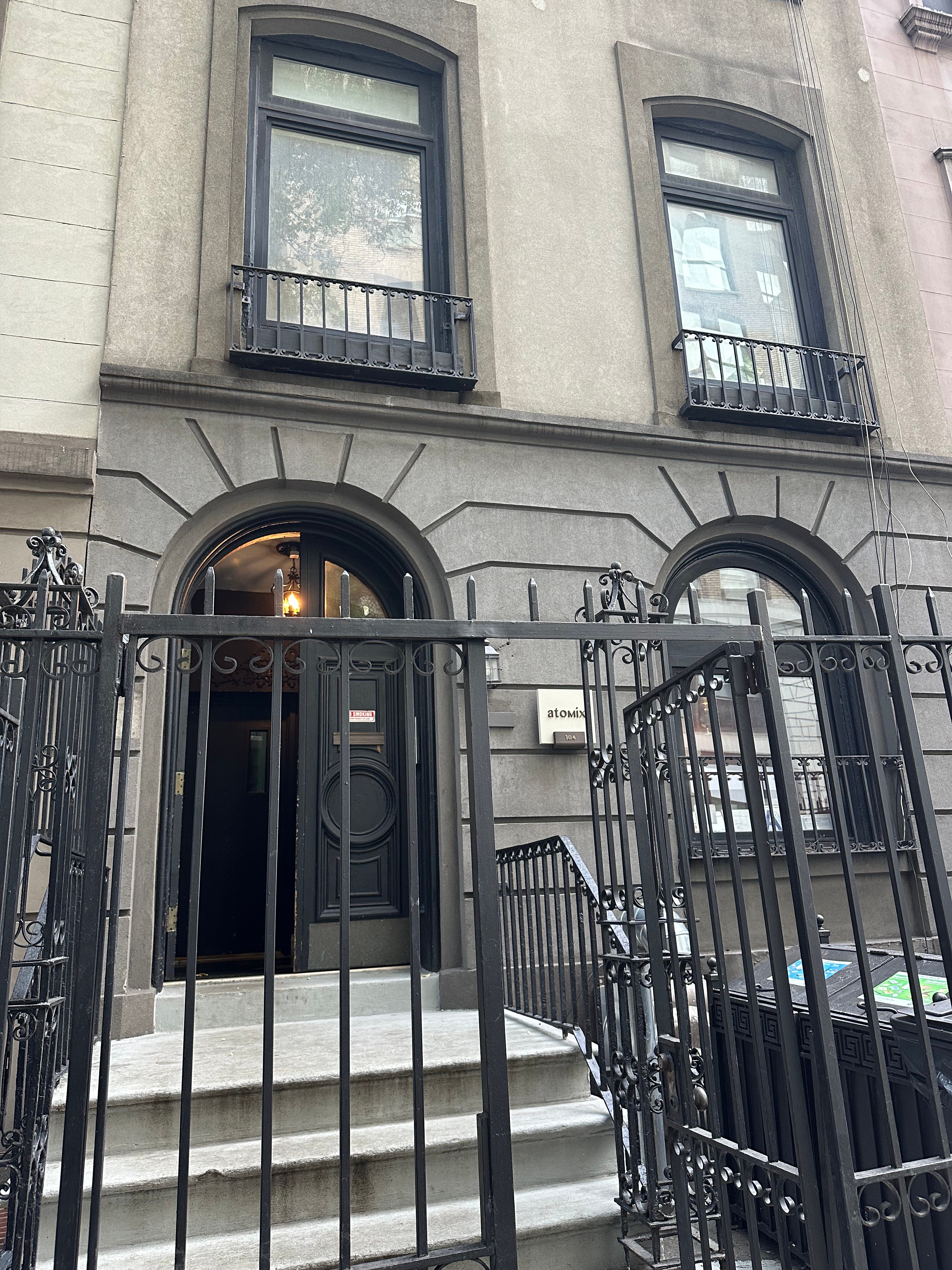
When you arrive at the towering Rose Hill townhouse, the novel-sized sign outside is the only indication that there is a restaurant anywhere nearby. You wait outside the locked door until your reservation time, when they will open up to greet you, sweeping you inside like the owners of a secret club, trained to not linger lest someone pops up to ask what’s going on in there. The short hallway just inside the door is an understatement. You’ve entered nice New York homes like this before, a quick weigh station to relieve yourself of your coat or bag. The host consults an iPad, but you get the sense that this is only to confirm that you are who they already knew you were.
A few more steps in and the bar floats in space. Six seats, low, a passing glance of a restaurant. There are stairs that lie beyond it, falling off the platform and descending into who knows what, but you won’t use them. You’ve made it inside, but what’s down there? The silent buzz in the air seems to be coming from some ongoing ceremony below. For now, though, you are here. A completely different menu than the chef’s table. But if handed a dish and asked to determine which it came from, I can’t imagine how someone would know.
I often think about our server, who operated from behind the bar the entire time with the rest of the staff. A convivial food nerd who would have fit in at anyone’s house party—someone you’re excited to talk to again, someone who knows when to walk away. Her composure shone. It felt like she was exactly where she was supposed to be.
There were three pairs of two diners at the bar, each with distinct energies, each of which she read carefully and spoke to individually.
My wife and I are a warm, curious pair, always down for the server to hang. To our left was a British couple celebrating their anniversary and dressed for a night at La Scala in 1975. To our right were 30-something friends who had no interest in talking to anyone, including each other. It was their third time there.
The way the service harmonized these three distinct experiences was a feat. She’d pour an extra splash of wine for the Brits, buying her time to get into the details of sunchoke sourcing with us. She’d regularly clock the waitlisters to make sure they never felt the momentum of the meal wane. They would have chosen to finish in thirty minutes if they could, the Brits would have sat all night. We were in the middle enjoying every moment.
Since the meal is prepared at the bar, there’s very little cooking going on. Outside of a couple induction burners, there is not much in the way of equipment. But containers emerge nonstop, the byproduct of hours and hours of unseen work, revealing component after component. There is a nonstop flow of plating within arm’s reach, quiet progress at every moment.
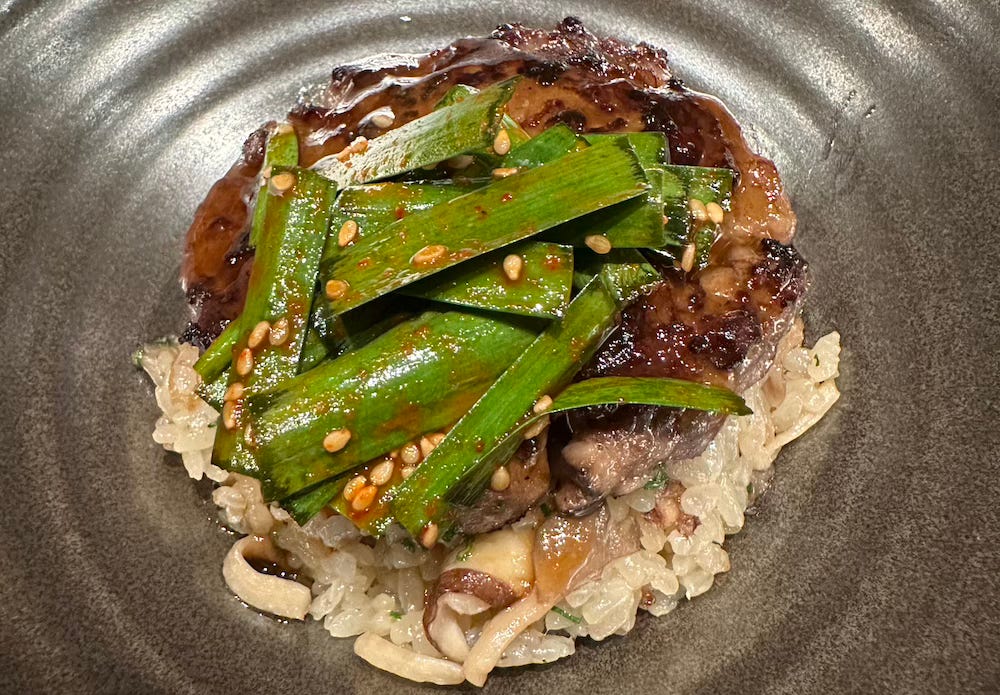
Each dish raised the stakes for the next, and the tteok galbi was the climax. A supple patty of short rib, nestled under a scatter of chivey buchu, over a pillow of Golden Queen rice and earthy oyster mushrooms. I’m so sorry they won’t be serving this if you go. Remembering these flavors—long umami—feels like chasing the back of a slow-moving train, where it seems I’m close to catching it but know I never will.
I wasn’t at the door yet when I vowed to return for the chef’s counter downstairs.
I have eaten at great restaurants and longed to go back, but I’m rarely haunted by a restaurant. I couldn’t stop craving what I’d just had, and knowing that there was some deeper iteration of it all waiting at the chef’s counter below tugged at me. I decided to try to get in as soon as possible. I did dry runs of my clicking choreography on Tock, like training for an event in a competition of fine urban living. The practice paid off, and two months later my wife and I returned.
This time we arrived to find the bar empty. No diners. No staff. The host had us wait there a moment, the sense of reporting to a secret location and awaiting further instructions. The stuff of military operations and Agatha Christie mysteries.
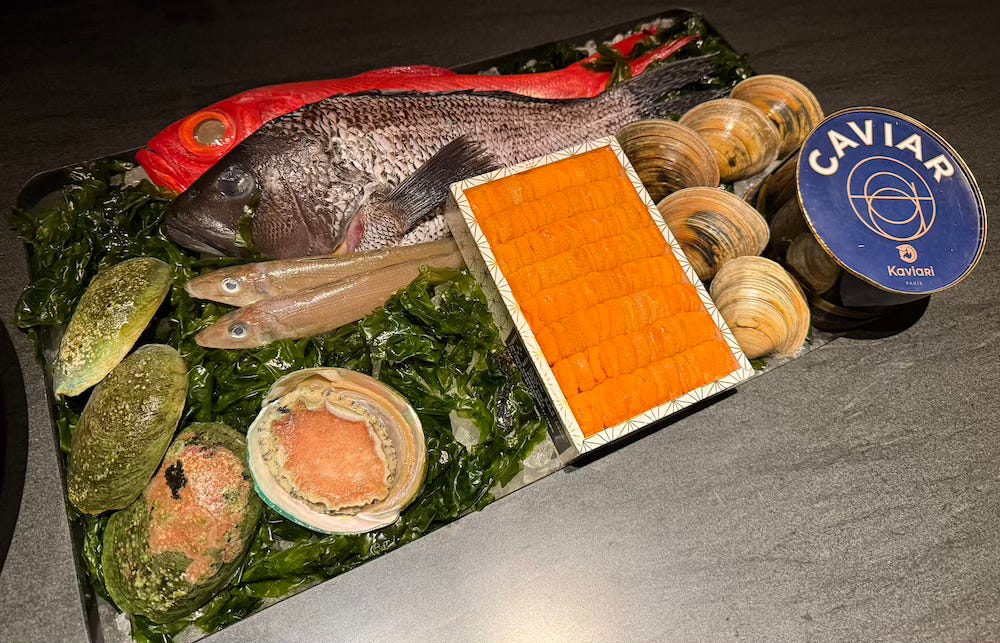
Soon we were ushered past the bar and down the stairs. First, we were greeted by a brief presentation of the ingredients we’d be eating that night, and a progression of soy sauces that would be featured. There was a ritualistic quality to the gesture—here is what was, imagine what it all could become. The magician showing you their props before the show.
The chef’s counter is not the same form of intimacy as the bar. Upstairs is a close embrace. Downstairs there’s more distance, the low ceiling adding a simmering intensity. The lighting is a hovering glow.
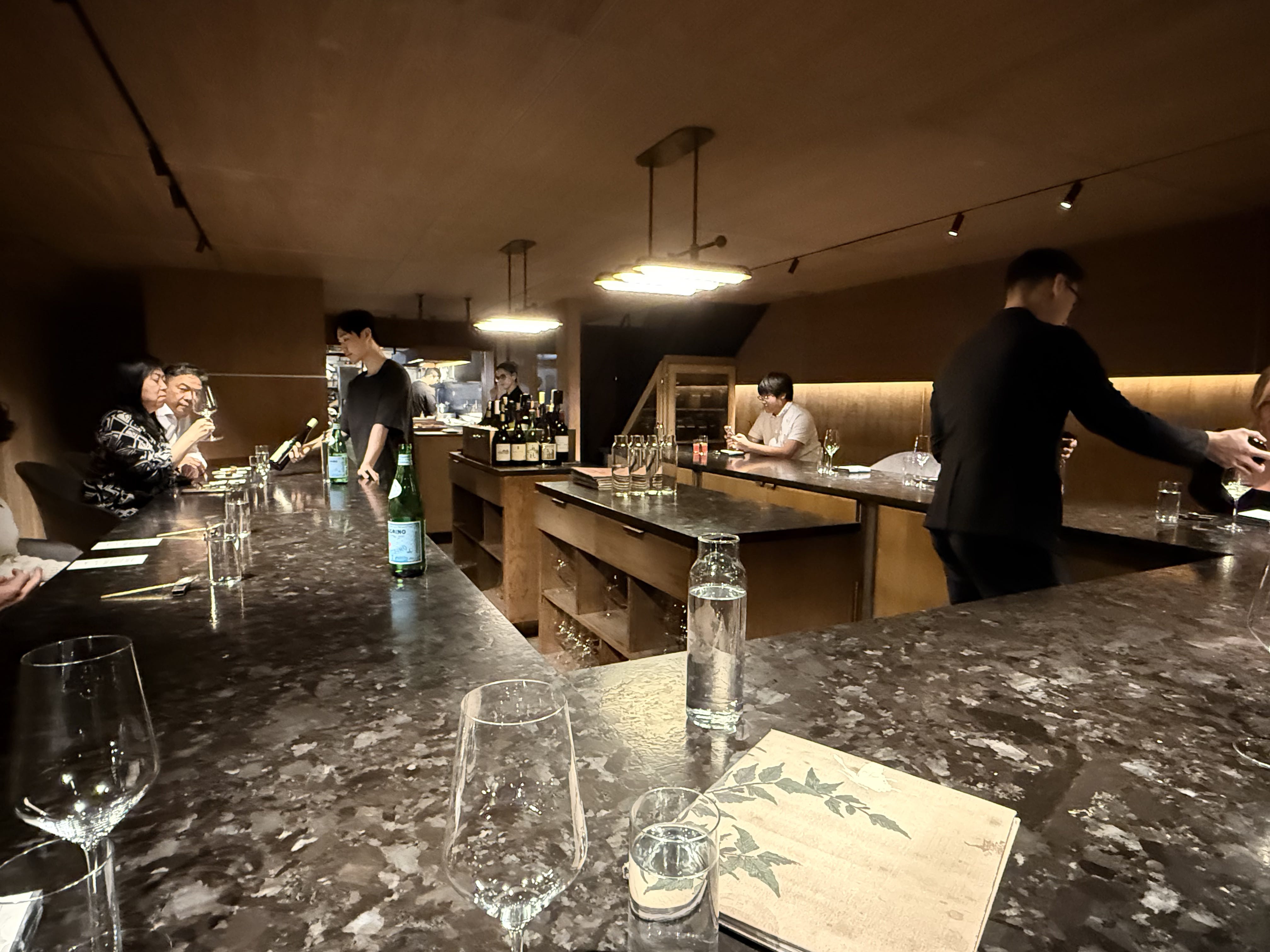
The broad U-shaped counter keeps you separated enough from others that you get a sense of owning a piece of the cool marble. The presentation of chopsticks for you to choose for your meal adds to the illusion.
There’s austerity in the air. Servers in simple black dress float through the room with the humble warmth of monks. The effect is meditative.
Each dish is preceded by the presentation of a small card. On one side there is artwork, and on the other a description of the next plate with a story from Chef Junghyun Park about its origins. The effect is like being directed to the wall placard beside a museum painting.
It’s too much to absorb in real time. I gave over to the experience at a certain point.
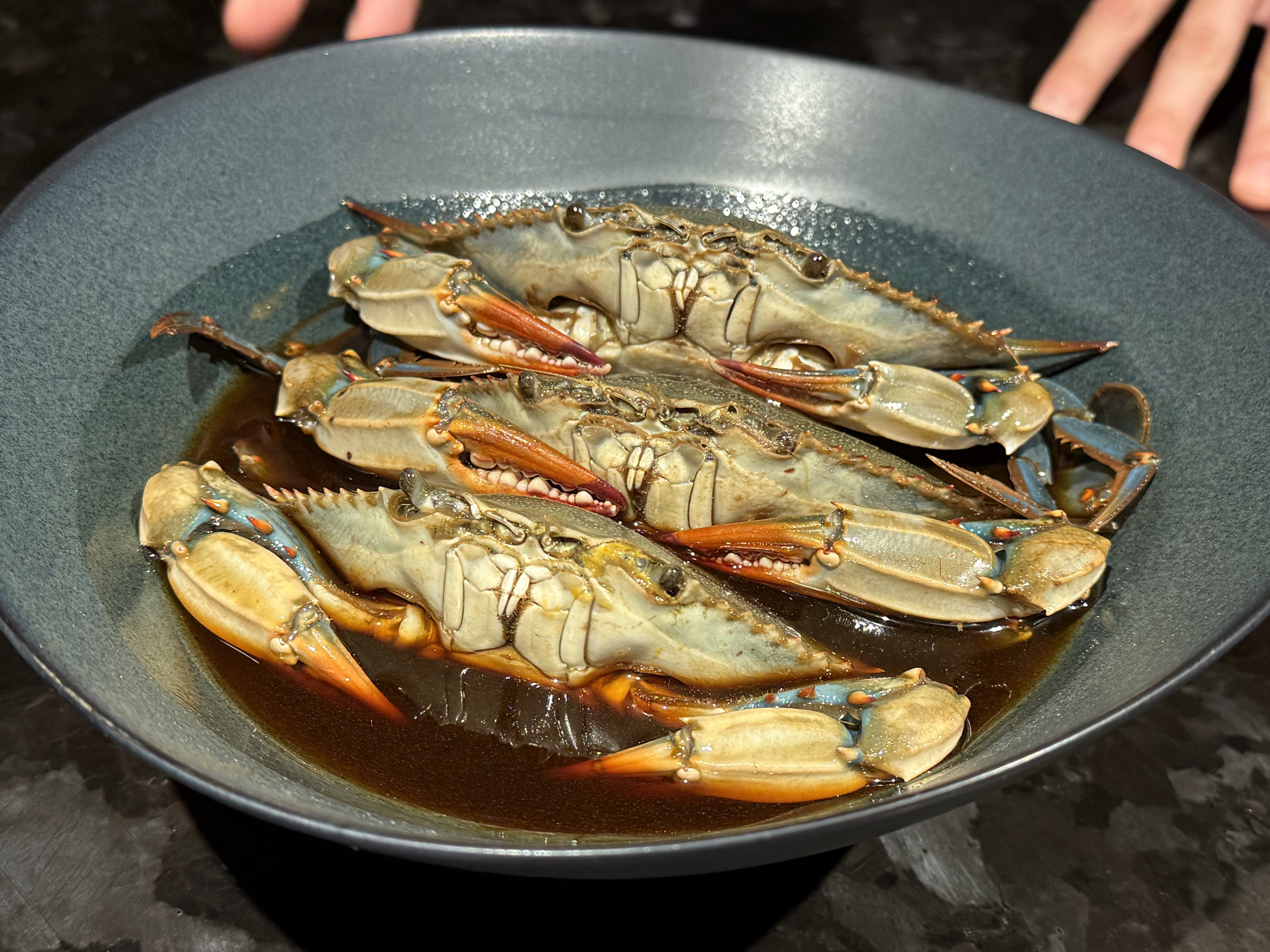
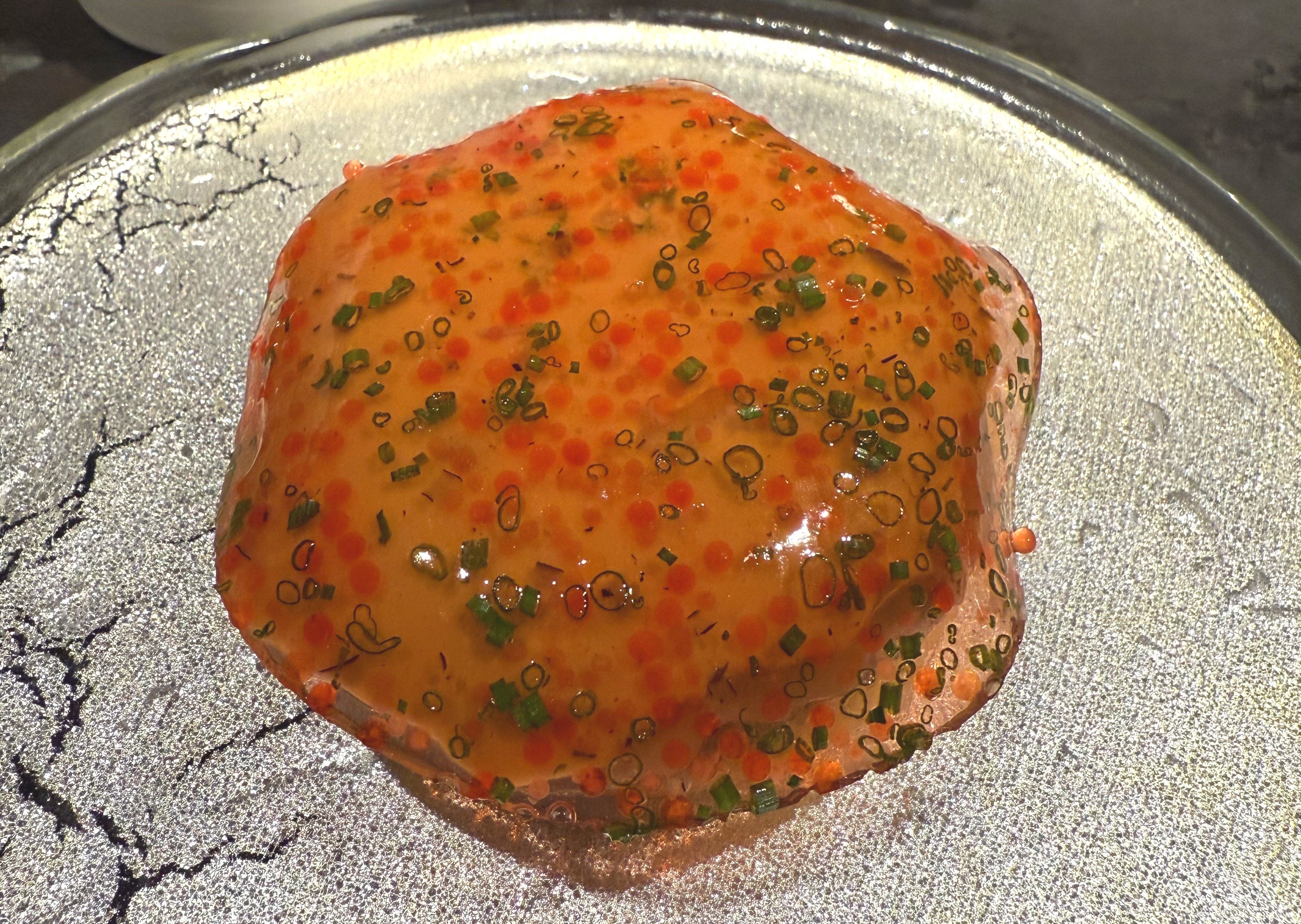
I have never had ganjang gejang, soy sauce-marinated raw crab, but Chef Park’s interpretation of it—the crab meat mixed with unctuous gim rice and Flying fish roe—was the most beautiful dish I’ve ever seen, an accolade I do not bestow lightly. What does it mean when you know that you’ll remember a plate of food for the rest of your life?
I have no memory of how I told my server that my dad lives in Miami for part of the year, but I still have the card she wrote for me of all her favorite places to eat there. It’s more than a year later and I’m still using it.
The standard practice during most fine dining wine pairings is to present you the bottle, describe the wine, pour, and then walk away. Here they leave the bottle at your table. It’s a subtle gesture, like most of the design here. You paid for this wine, enjoy looking at it longer while it’s still there.
Over time the little bits and bobs of one night’s memories slip through the cracks, and what remains are whole impressions. These are the supplies you’ll use to build your well-spent years.
I think Atomix is propelled by longing, the belief that a meal framed by enough context and buoyed by enough narrative can approach permanence. It can’t, but my impressions of it still echo forward.
Images:
Ganjang gejang, gim rice, Flying fish roe
Outside Atomix
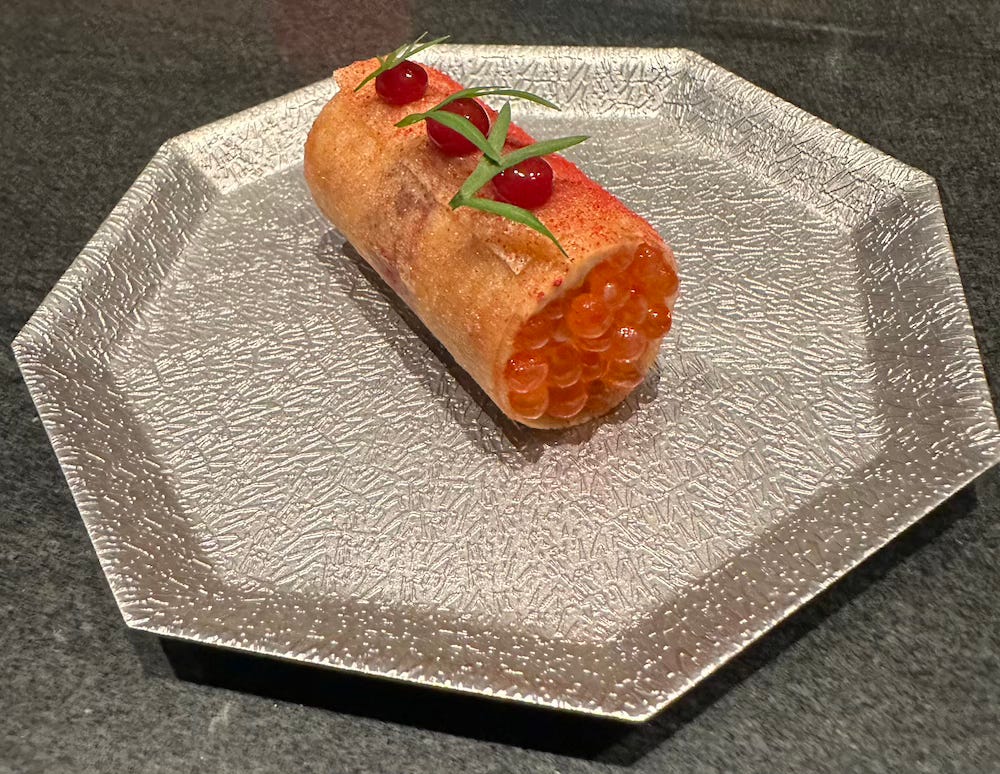
Monkfish liver, raspberry, smoked trout roe
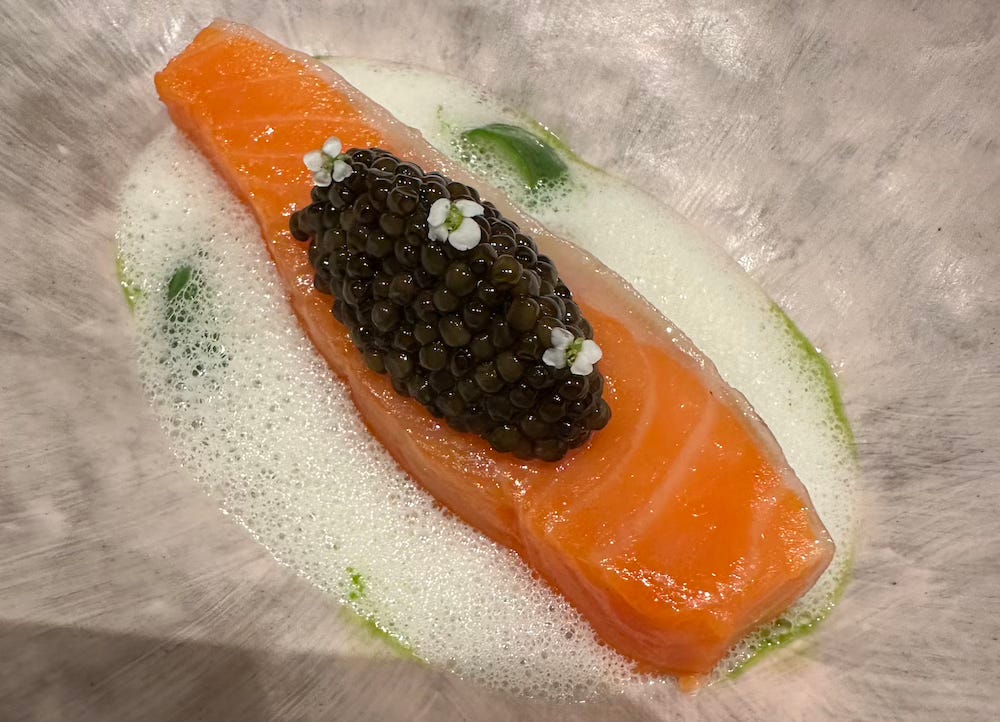
Arctic char, Kristal caviar, white kimchi, yuzu kosho
Tteok galbi, Golden Queen rice, buchu, oyster mushroom
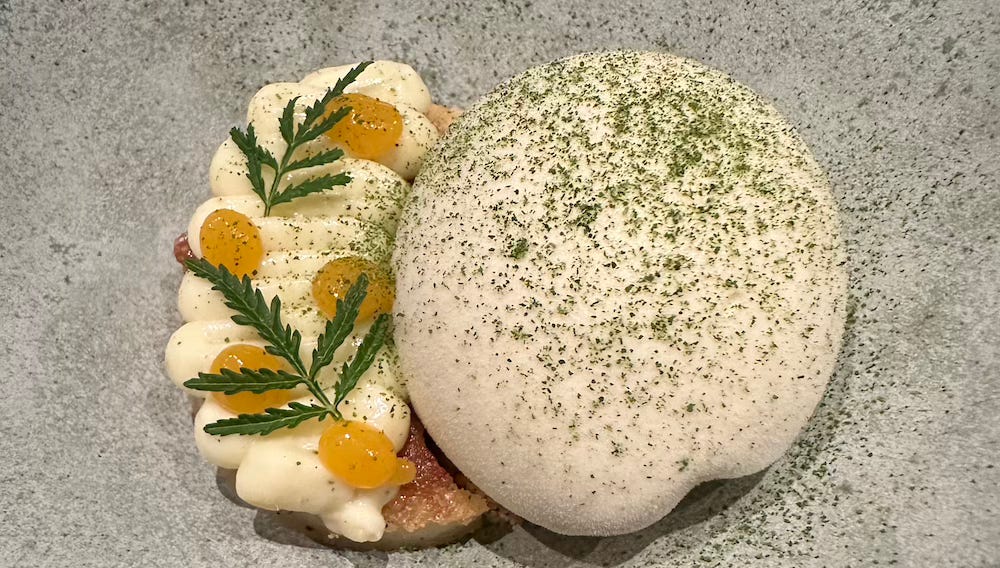
Lemongrass ice cream, coconut rice cake, fig leaf
Ingredients
The chef’s counter
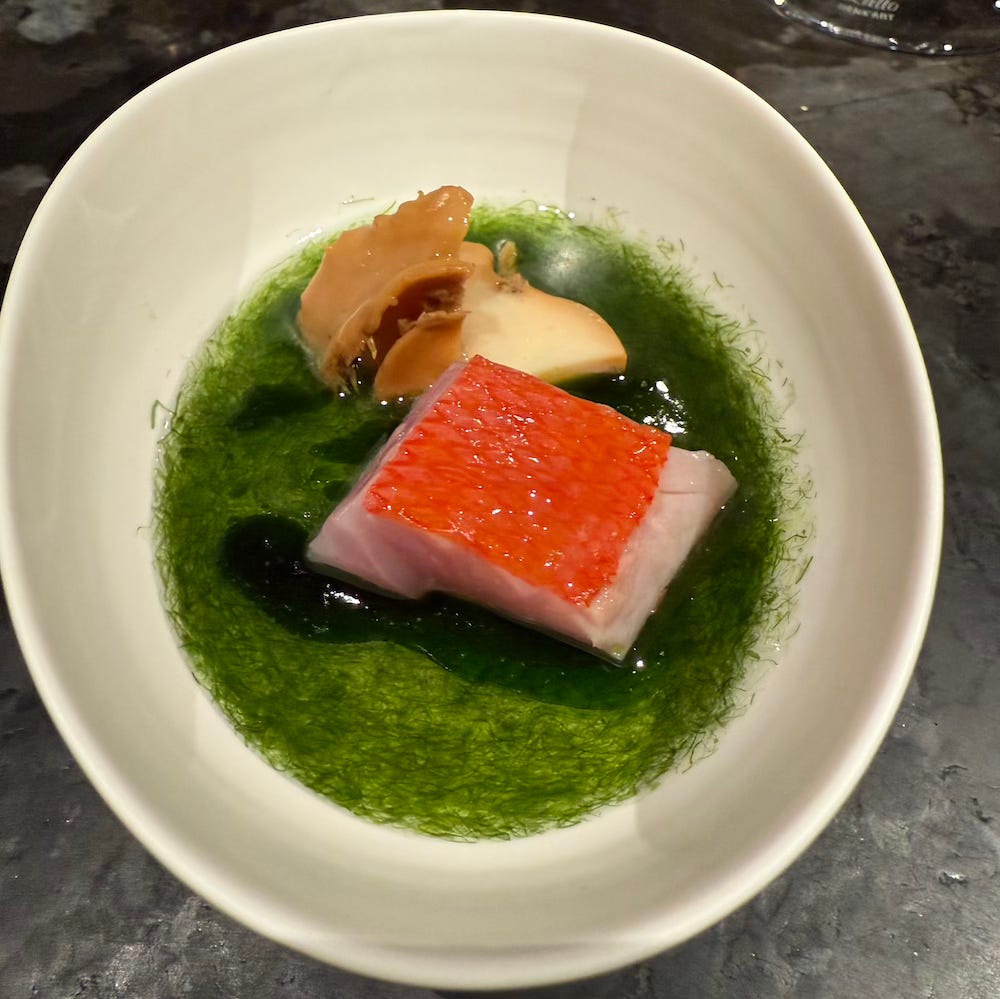
Golden eye snapper, Maesaengi, Abalone
Crabs that would become ganjang gejang
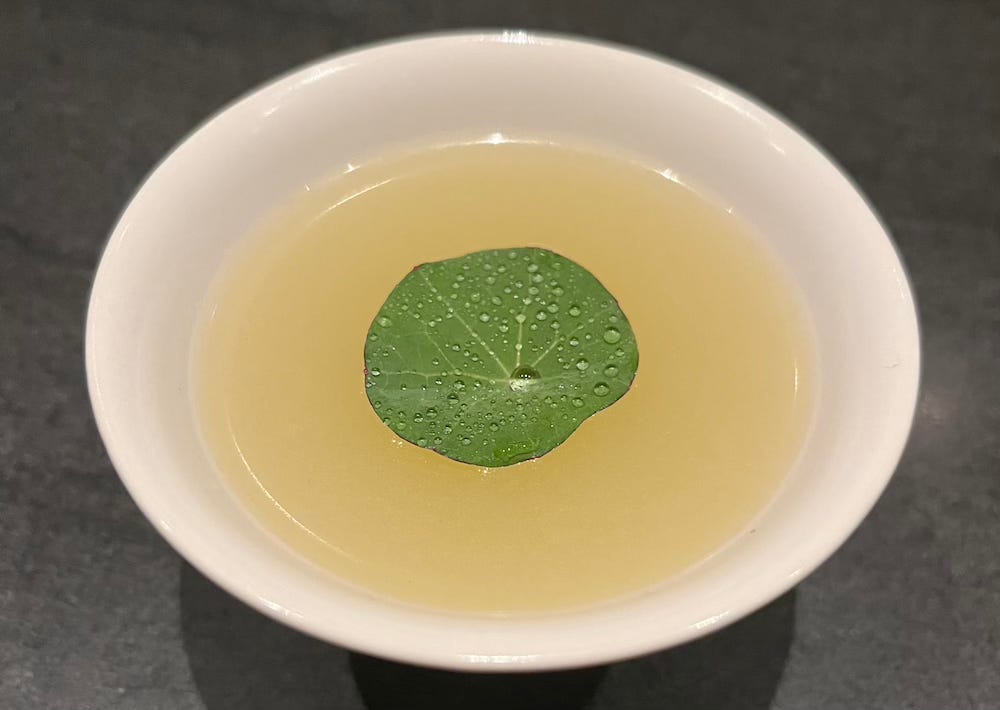
I don’t remember